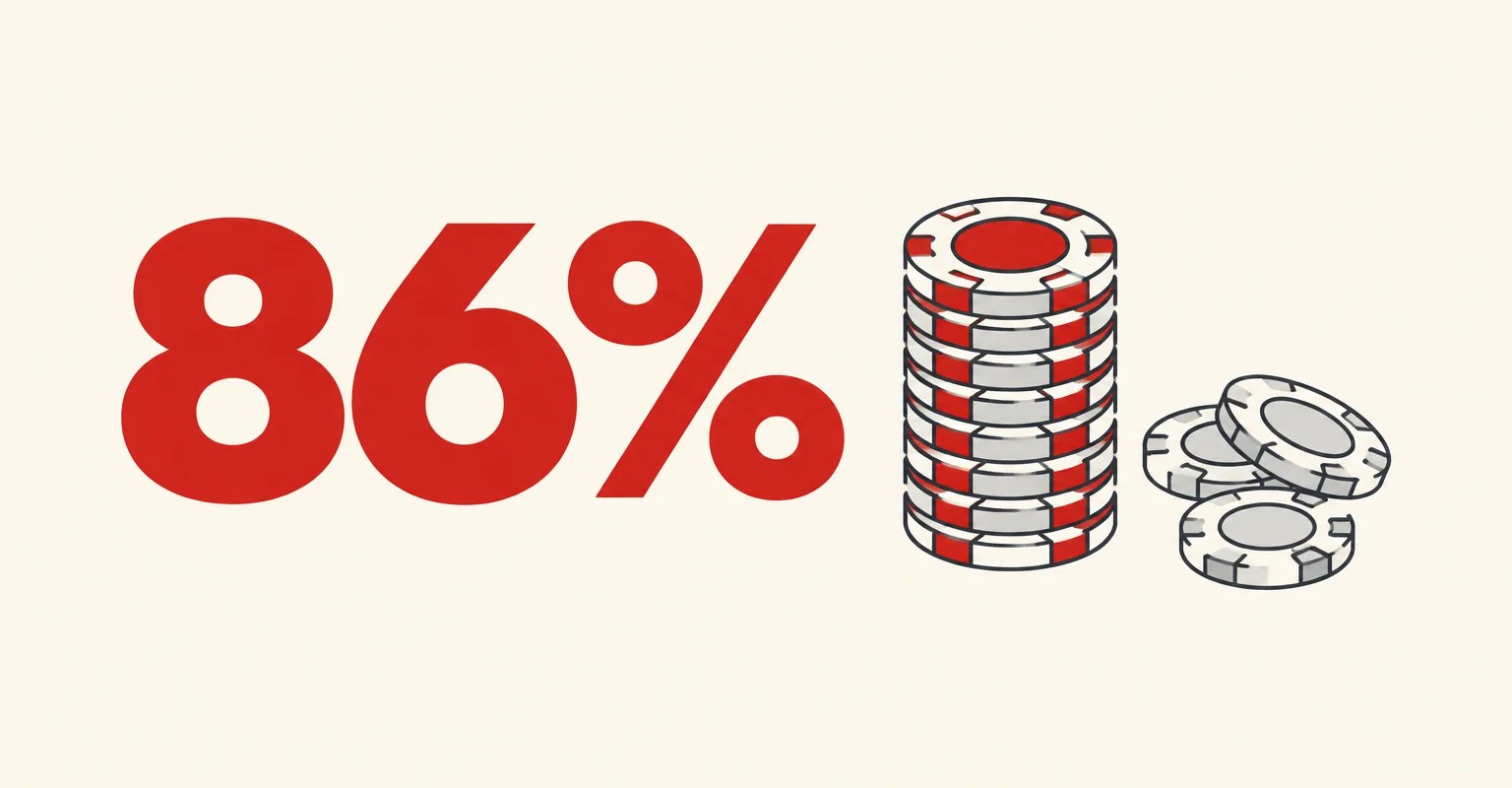
Ukraine’s Ministry of Digital Transformation has published the second stage of its gambling-market study, focused on players. The survey found that 86% preferred licensed online casinos and 78% did not plan to switch to illegal operators.
More than half of respondents, 56%, had more than four years of experience playing online casinos, while 36% had played for one to three years, 30% for four to six years, 26% for seven years or more and 8% for less than a year.
Men made up 73% of the audience. They were also more likely to be long-term players, with 20% of men and 5% of women reporting more than ten years of experience.
It said 42% of respondents had complete higher education and 38% had secondary specialised education. On income, 31% reported 11,000 to 30,000 hryvnias a month and 25% said they earned 31,000 to 50,000 hryvnias.
Asked why some people move to illegal operators, respondents most often pointed to quick registration without identity verification, at 33%. Anonymity was cited by 17%, and the absence of limits by 16%. By contrast, legal operators were most often valued for state protection, cited by 51%, followed by lower fraud risk and fair-play or payout guarantees, at 44%, and secure payments and banking-data protection, at 32%.
About 59% said they saw their play as controlled leisure, while 35% said it sometimes got out of control and 6% said that happened often. The most common problematic behaviour was a single attempt to win back losses, at 24%, followed by spending more than planned, at 23%.
Only 9% said gambling had caused serious financial, family or other life problems. At the same time, 53% said the state regulated the sector sufficiently, and 44% said they trusted the ministry and the state agency PlayCity on gambling regulation.
Just 22% said they knew about the ministry’s and PlayCity’s roles, while 13% knew they could view their own game statistics, 11% knew the legal minimum age, 10% knew about the register of people restricted from gambling, 9% knew about the ban on bonuses after a loss or during a session, and only 5% knew of treatment facilities for gambling addiction.
The ministry said respondents expected tighter enforcement of online-casino rules, stronger player protection and further limits on gambling advertising. Separately, the ministry said the Cabinet of Ministers had adopted a resolution introducing a mechanism to restrict military personnel’s access to gambling during martial law.