People in Great Britain whose banking records showed transactions with suspected illegal gambling operators were far more likely to fall into the Problem Gambling Severity Index’s highest-risk band than licensed-gambling customers in the same dataset.
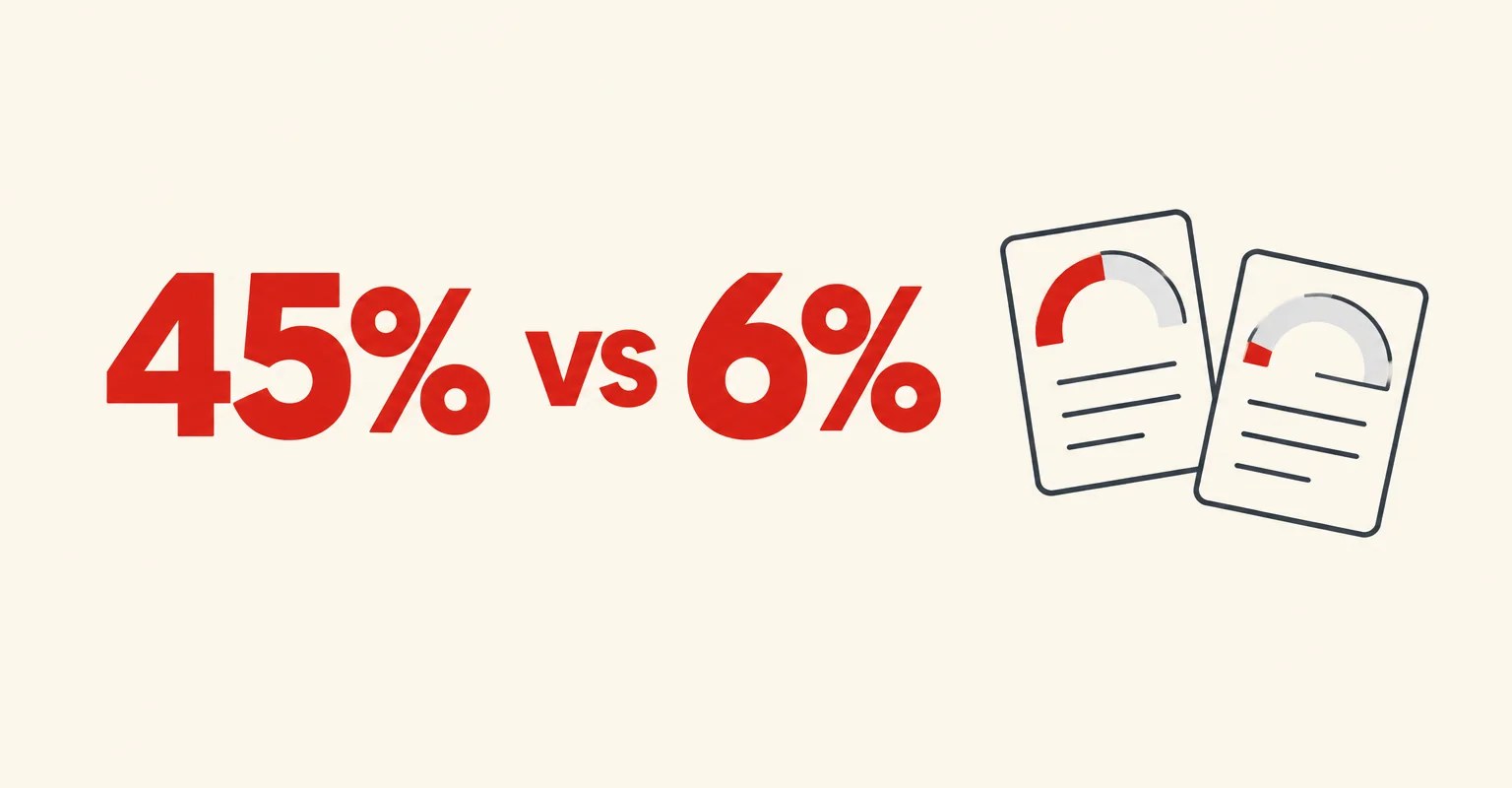
Forty-five percent of people with detected illegal-operator transactions scored 8 or higher on the PGSI, compared with 6% of licensed gambling consumers. A score of 8 or above indicates problem gambling behaviour. The difference means the highest-risk score was recorded more than seven times as often in the group with detected illegal activity.
The Gambling Commission’s analysis does not establish that using an illegal site causes gambling harm. Its methodology did not permit causal analysis between engagement with unlicensed operators and harm.
The research also found elevated scores in the PGSI’s 3-to-7 range: 17% among illegal-gambling users, against 9% of licensed customers. It drew on Open Banking records from 38,000 people collected between July 2018 and July 2026, linked anonymously to survey responses, including PGSI scores for many participants.
The study identified 3,426 transactions believed to involve illegal operators, linked to 179 people. Of those, 146 had PGSI scores available. The Commission defined illegal gambling as commercial gambling offered to consumers in Great Britain without a Commission operating licence or a valid non-commercial exemption; a licence from another country does not authorise an operator to serve the British market.
Illegal activity generally appeared to coexist with licensed gambling rather than displace it. The Commission found that illegal transactions often occurred alongside transactions with licensed operators and detected no substantial movement away from the licensed market in the months after a person first engaged with the illegal market.
Among the 122 people with at least two detected illegal transactions, average monthly licensed-gambling transactions were 24.8 in the month before the first identified illegal payment and 23.7 in the following month. Separate reporting by NEXT.io put the share of repeat illegal-site users who also used licensed operators at 91%.
The findings are subject to significant limits. The Commission said its data did not cover the illegal market sufficiently to estimate its size, either in absolute terms or compared with licensed gambling. Some unlicensed transactions may not have been detected, and the dataset was not nationally representative.
The difficulty partly reflects how illegal operators appear in payment data. They rarely use their real business names in financial descriptors, while standard bank records do not capture cryptocurrency transfers or alternative payment networks. The research used a Yaspa algorithm, informed by regulatory data, test purchasing and machine learning, to identify licensed gambling transactions when its probability score exceeded 0.5.
Only 4% of detected unlicensed-operator transactions used credit-card accounts, and 8% of people with detected illegal engagement had made at least one such payment. The Commission described the work as a proof of concept for using financial transaction data to understand illegal gambling in Great Britain and elsewhere. Its earlier trend research found no evidence of persistent growth in consumers’ use of illegal gambling sites.