New Jersey Senate Bill 597 would replace criminal penalties for people under 21 who gamble at licensed casinos or simulcasting facilities with escalating civil fines, while leaving the state’s casino-gambling age at 21.
The bipartisan measure would amend the Casino Control Act. A first violation could bring a fine of up to $500, rising to $1,000 for a second violation and $2,000 for a third or later offense.
Under existing law, an under-21 person who enters or wagers at a licensed casino or simulcasting facility can face a disorderly-persons charge. The bill would remove that criminal designation, according to Shore News Network, and would similarly substitute civil penalties for casino employees who knowingly allow an underage person to remain or gamble and adults who knowingly permit someone in their care to gamble while underage.
Casino workers would retain the existing defence available when they relied on false identification presented by a minor. The proposal would change the punishment for violations rather than legalising underage gambling.
All fine revenue would be deposited in New Jersey’s General Fund and appropriated to the Department of Human Services for compulsive-gambling programmes that meet state standards. Eligible services include those provided by the Council on Compulsive Gambling of New Jersey, directing the penalties towards prevention, education and treatment.
Sens. James Beach, a Democrat, and Vincent Polistina, a Republican, sponsored the measure, with Sens. Kristin Corrado, Shirley Turner and John McKeon listed as co-sponsors. It was pre-filed for the 2026-27 legislative session and must still move through the Legislature before it can reach the governor.
The proposal follows an unsuccessful earlier effort by Beach and Polistina. Their substantially similar Senate Bill 3972 was introduced in December 2024 but did not become law before the end of the 2024-25 session.
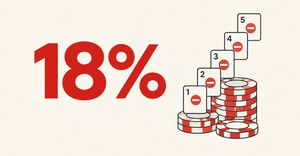
The change is framed around problem-gambling treatment at a time when the state’s prevalence data have pointed to elevated risk among younger residents. A 2023 New Jersey study found that about 6% of residents were at high risk for problem gambling, roughly three times the national average in population samples. The figure reached about 19% among respondents aged 18 to 24, a group that included people below the state’s legal gambling age.
A separate Assembly proposal, sponsored by Assemblywoman Claire Swift, would likewise change underage gambling from a disorderly-persons offence to a civil penalty; it had not been voted on in either chamber.