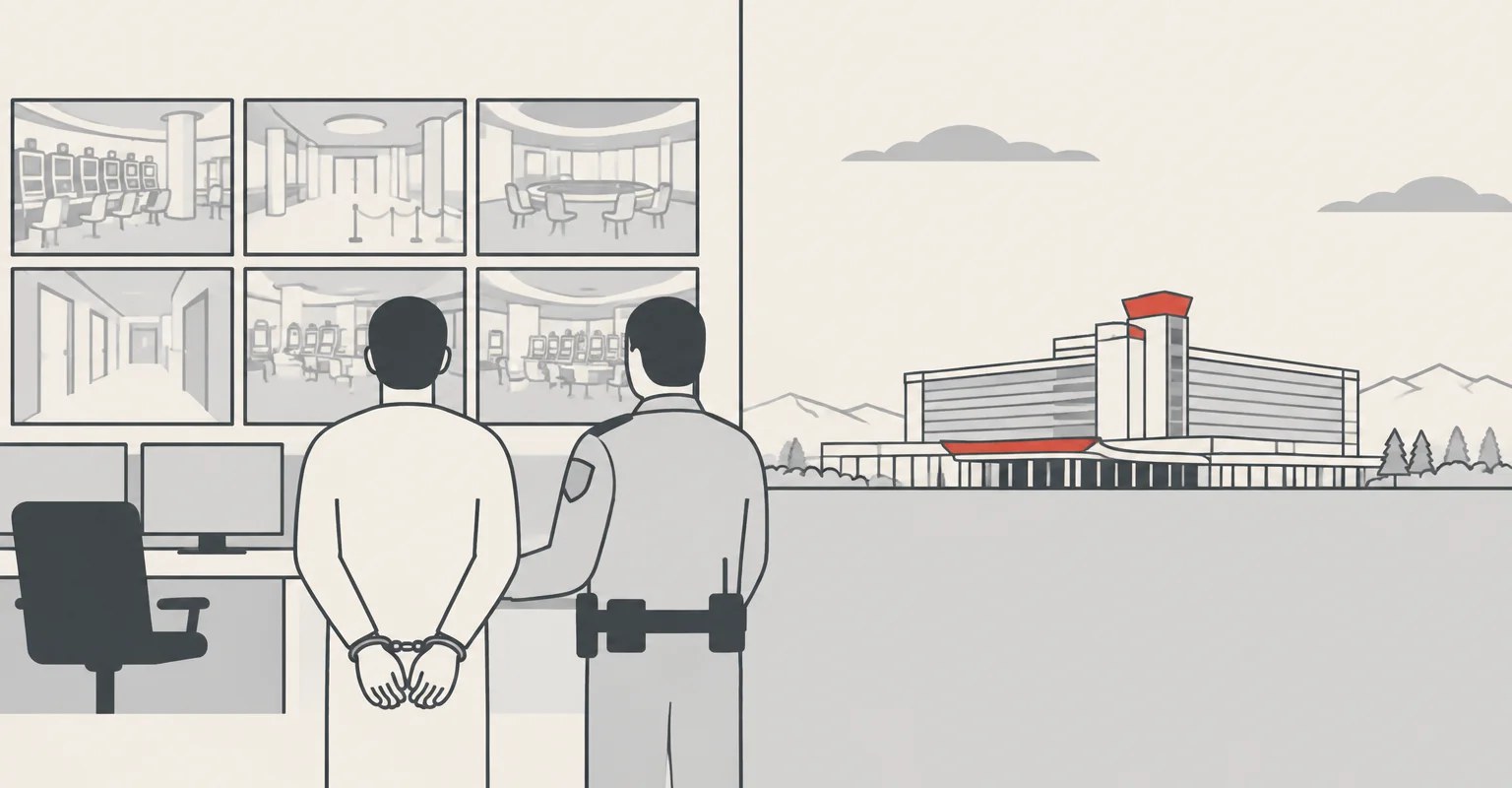
Jason Killinger has asked a federal judge to compel the City of Reno to hand over unredacted arrest reports and the names of 168 other people flagged by Peppermill Casino Resort’s facial-recognition system. He says the records could help show whether Reno police were operating within a broader pattern of facial-recognition-based arrests.
The request sits inside Killinger’s federal civil-rights suit over his September 2023 arrest at the Peppermill. According to the amended complaint filed on April 2 in U.S. District Court in Nevada, the casino’s software marked him as a “100% match” for Michael Ellis, a patron who had been banned months earlier for sleeping on the premises.
The filing says Killinger was a regular customer playing dice and later blackjack when security surrounded him and handcuffed him. It says he had a Nevada Real ID commercial driver’s licence, a Peppermill player’s card and a bank debit card in his pocket, yet was detained for nearly nine hours and spent more than three hours in handcuffs.
The complaint says Officer Richard Jager arrived at about 5:46 a.m., roughly an hour and a half after the restraint began, and that a fingerprint check at the Washoe County jail confirmed Killinger’s true identity. It also says Jager later filed a police report alleging Killinger had shown conflicting identification to Peppermill security, a claim the complaint denies.
After settling out of court with Peppermill, Killinger sued Jager and later added the City of Reno. A federal judge later allowed the city to be added as a defendant, and the amended complaint says Jager had received no training in facial-recognition software or artificial intelligence and that Reno police had no facial-recognition policy. Reno Gazette Journal reported that, as of April 2, the department still had not adopted such a policy or required officers to be trained that a match alone is not enough to establish probable cause. It also cited a 2017 Justice Department template describing facial-recognition matches as “advisory in nature” and saying they “do not establish probable cause.”
The records fight now turns on the 168 other people Killinger’s lawyers say were cited or taken to Reno police after facial-recognition identifications at Peppermill. The city produced more than 1,000 pages of records, but removed names and other identifying details without first seeking a protective order, according to the motion.
His lawyers argue those people are “percipient witnesses” and that their identities matter because Killinger is seeking injunctive relief and may pursue class-action claims. In an August 14 response, Deputy City Attorney Alice Herbolsheimer said the city had already compromised by turning over reports while disputing their relevance, and said it had provided dates, times and initials but not names because of privacy concerns. She added that only 16 of the 168 arrests happened before Killinger’s own case, so later ones could not show the city had notice before his arrest. The judge had not ruled on the request when the latest report was published.