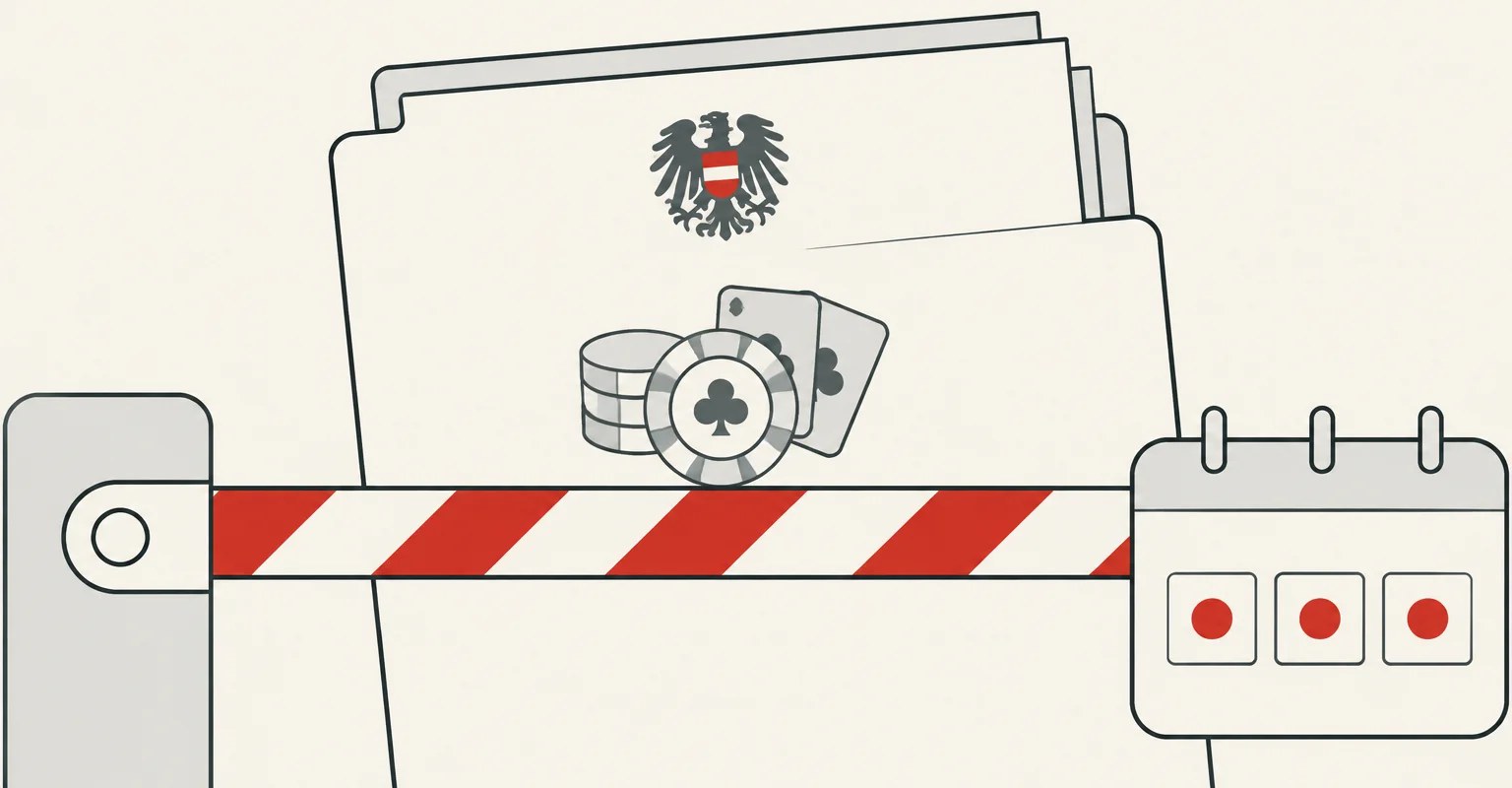
Austria has notified its proposed gambling-law overhaul to the European Commission, triggering the EU’s three-month standstill period before the bill can be adopted. The finance ministry said the parliamentary process can continue in the meantime, but the law itself cannot be decided until that period ends.
According to the ministry, the centrepiece of the reform is a new framework for online gambling and a broader modernisation of player protection. The draft would replace the current monopoly model for online play with an open concession procedure, opening the market to multiple licence holders.
That shift comes against a wider backdrop in which Austria’s gambling law, the GSpG, keeps gambling, casinos and lotteries under the finance ministry’s remit, while international online gambling remains subject to the national monopoly. The ministry says its policy is aimed at regulating and controlling games of chance, countering addiction, protecting consumers and preventing unlawful activity.
The draft would also set tough entry conditions for would-be online operators. Companies that have been offering gambling illegally would have to stop by 1 January 2027 if they want to be eligible for a licence, or face an 18-month exclusion period before they can apply. From 2030, that waiting period would rise to 24 months.
Applicants would also have to settle outstanding tax debts and unpaid player-protection claims. The ministry said that would bring justice for about 20,000 harmed players in Austria.
A series of enforcement tools is built into the reform. Payment blocking, blacklisting and network blocking would be used against unlicensed operators, with the stated aim of pushing customers towards legal offerings.
Player protection measures go further. The draft would create a digital supervision system with a central, operator-independent deposit limit, while also setting lower limits for people aged 18 to 26. It would also introduce, for the first time, a central exclusion register spanning casinos, slot machines and online gambling, recording both operator-imposed exclusions and self-exclusions.
The ministry also wants operators to submit gambling-addiction potential analyses, which it says would support scientifically grounded research. For slot machines, the draft would reduce game speed and maximum stakes and impose a compulsory cooling-off period after 90 minutes of play.
On the land-based side, the amendment would cap casino concessions at 13 and allow them to be awarded in packages. For bundled awards, the ministry said the aim would be to minimise competitive pressure between casinos, strengthen player protection and keep the allocation balanced.