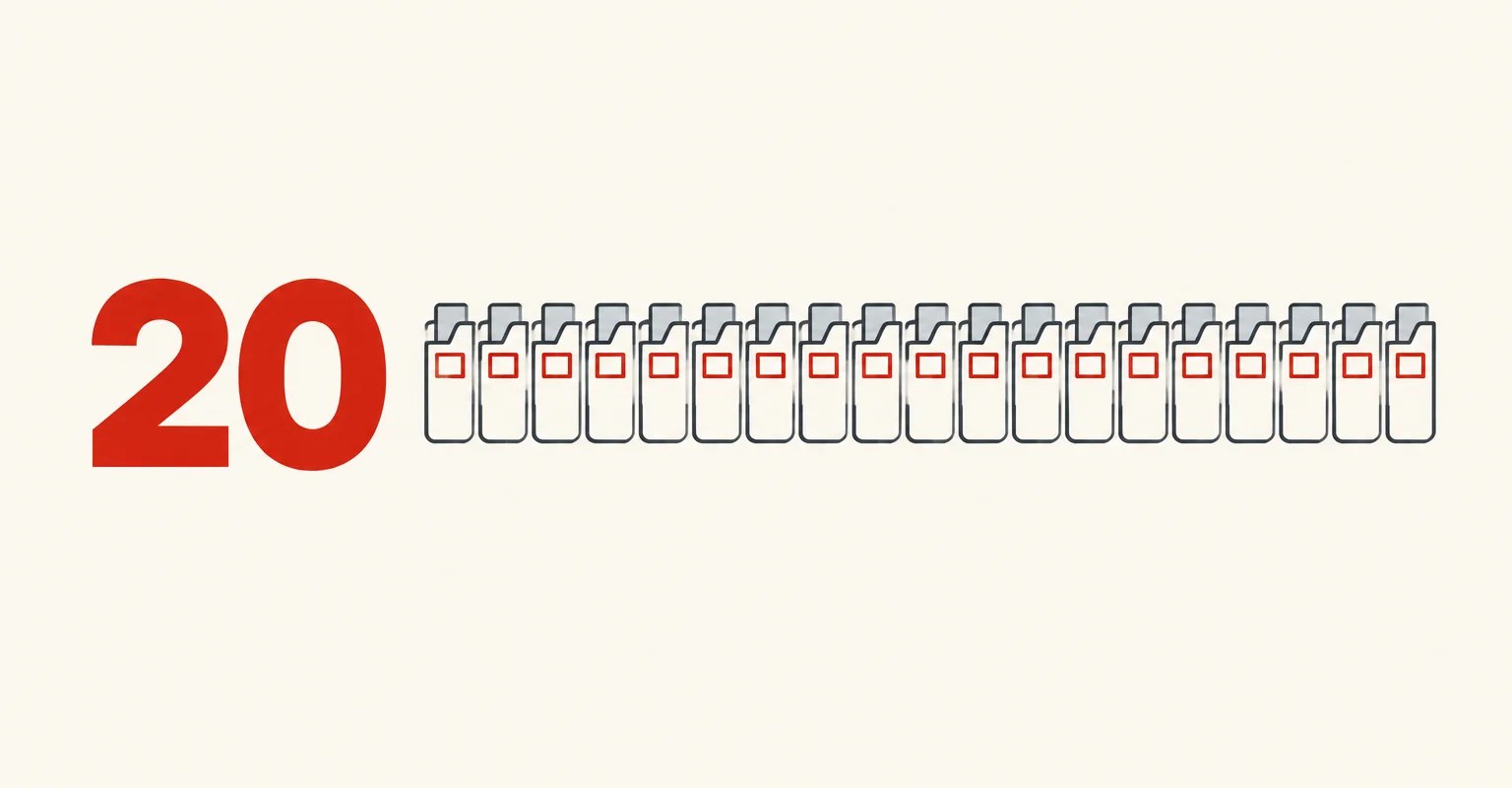
Austria’s Finance Ministry expects about 20 companies to seek concessions under the country’s proposed open online-gambling regime, an estimate contained in the regulatory impact assessment for government bill 594 d.B. The plan would replace the current online monopoly with an uncapped licensing system for multiple operators, while limiting land-based casino concessions to 13.
The ministry’s projections assume that licensed operators will account for 45% of online gambling when the first concessions take effect in October 2027. It forecasts channelisation rising to 60% in 2028, 70% in 2029 and 75% in 2030, against a medium-term objective of at least 80%.
As reported in August, Austria notified the gambling-law overhaul to the European Commission on Aug. 4, beginning a three-month standstill period during which the law cannot be adopted, although parliamentary work may continue. Bill 594 d.B. reached the Nationalrat on Aug. 5 and was assigned to the Finance Committee on Sept. 14; as of Oct. 20, the committee had not begun its deliberations.
The opening would follow the expiry of Austrian Lotteries subsidiary win2day’s existing sole online licence on Oct. 1, 2027. The bill frames the multi-provider system and stronger enforcement as a means of moving activity from illegal to regulated gambling while improving player protection.
Applicants would need at least €10 million in capital. Companies with prior unlicensed Austrian activity would have to settle outstanding, non-time-barred gambling taxes and satisfy final Austrian civil judgments won by players before receiving a concession. The rules would apply across a corporate group up to the beneficial owner, as well as to brands used for the unlicensed offering.
Operators that cease unlicensed activity after Dec. 31 would face an 18-month exclusion from receiving a concession. That exclusion would rise to 24 months for operators leaving after Dec. 31, 2029. The Finance Ministry has said operators must stop serving Austria by Jan. 1 to avoid the proposed exclusion period.
The draft also proposes a €250 weekly online-deposit limit for players under 26 and a €1,680 monthly limit for older players. Operators could set a different limit for players aged 23 and above after assessing risk and applying additional monitoring, but any increase to a self-set limit would be delayed by 72 hours.
A central exclusion register spanning casinos, slot machines and online gambling would be accompanied by deposit-limit registers, website and payment blocking, and a public blacklist. The legal basis for those tools would take effect on Jan. 1, though the finance minister would set the date on which operators must join the exclusion and deposit-limit registers.
The impact assessment forecasts net public-sector financing of about €467 million cumulatively from 2026 to 2030, rising from €20.4 million in 2027 to €170.6 million in 2030. It also expects roughly €40 million in annual gambling tax currently collected from unlicensed online operators to disappear from 2030 as those operators either leave Austria or join the licensed market.
Industry figures have questioned whether the framework can meet its channelisation goals. Felix Geyer said Austria’s political and administrative processes could prevent licences being awarded within 12 months, while OVWG President Simon Priglinger-Simader warned that temporarily excluding established European operators could push players towards the black market. The draft requires an internal evaluation of the online regime by the end of 2031, including the effect of cross-operator deposit limits on player protection and channelisation.