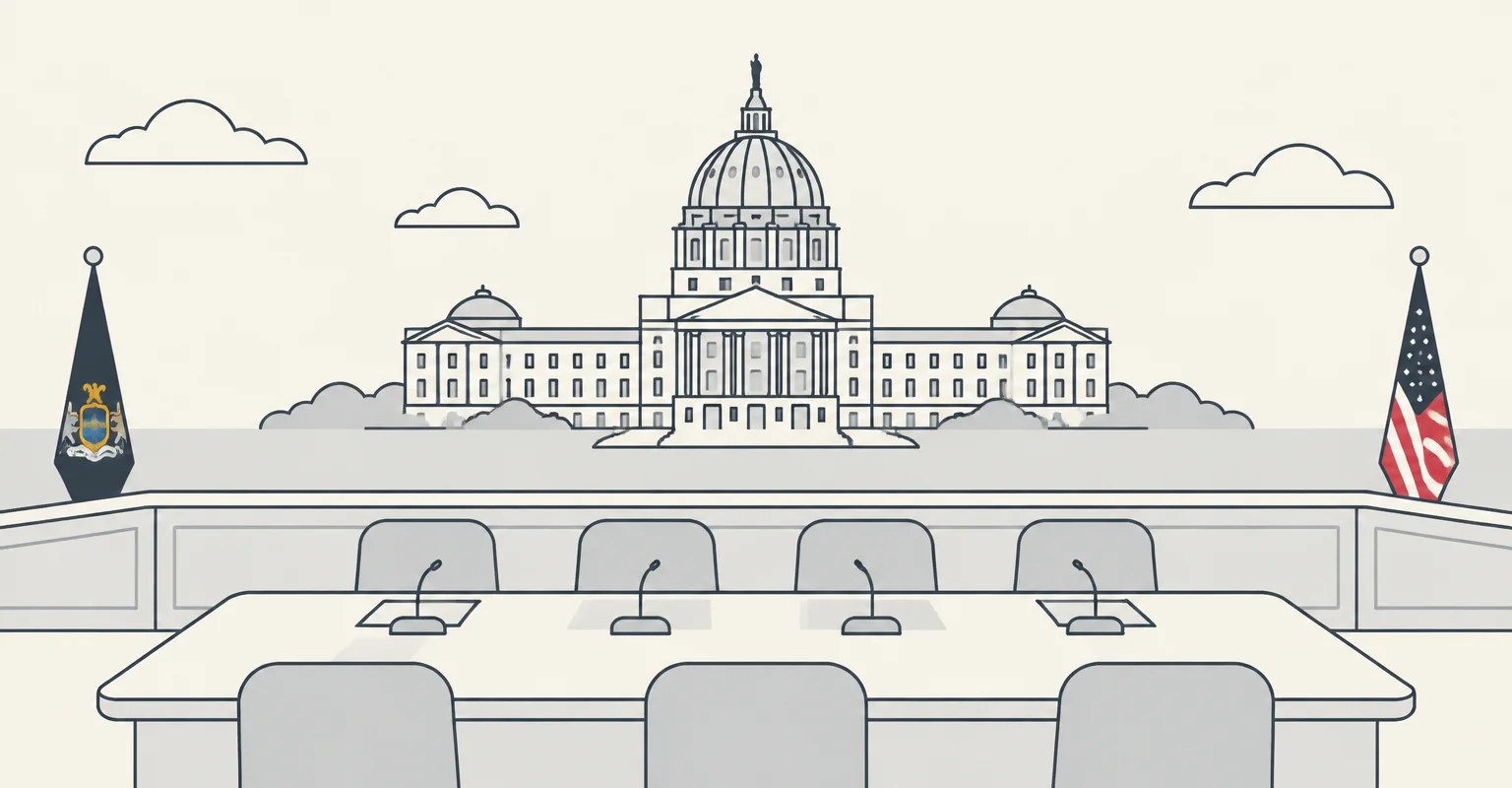
Pennsylvania lawmakers have launched the state’s first bipartisan Problem Gambling Caucus, creating a forum in the General Assembly to develop prevention, education and consumer-protection responses to gambling harm. State Sen. Joe Picozzi and Rep. Ben Sanchez are leading the group, with Rep. Jamie Flick a founding member.
The caucus has not yet announced legislation. Its initial priorities are reducing underage exposure to gambling, educating young people about the risks of casinos, sports betting and online gambling, and examining the effects of betting advertising. It also plans to consider stronger safeguards as gambling becomes more accessible online.
Pennsylvania requires people to be at least 21 to gamble online or in casinos. Lawmakers cited concerns that minors can evade age checks through virtual private networks, false identification or another person’s documents. The Gaming Control Board has separately warned that illegal, unregulated sites may lack protections designed to prevent underage play.
The new group is framing problem gambling as a public-health issue with social costs that must be weighed against gaming revenue. “When people lose their life savings, nobody wins,” Picozzi said. “State revenues are relevant to that, because there’s a huge social cost to that, too.” Flick described online gambling as a readily available threat, saying: “The drug of choice now sits in your pocket.”
The focus comes as gambling losses and participation have increased. Pennsylvania players lost $6.8 billion across casinos, iGaming, sports betting, video gaming terminals and fantasy sports in 2025, according to Casino.org. Online casino losses were $2.7 billion, compared with $1.1 billion in 2021, while sports-betting losses rose to $602.5 million from $340.1 million over the same period. Those figures exclude prediction markets.
Penn State research published in January found that 30% of Pennsylvania adults engaged in some form of online gambling annually, an all-time high and 10% above the prior year. Its researchers estimated that 2.5% to 6.4% of Pennsylvanians may be problem gamblers. In December 2025, the Council on Compulsive Gambling of Pennsylvania said adults aged 18 to 24 had generated the greatest volume of outreach calls for the first time.
The caucus adds a legislative track to existing state work on gambling harms. As covered in August, Pennsylvania has added dedicated case management to its problem-gambling support network, linking callers to 1-800-GAMBLER with practical assistance as well as treatment resources. The Department of Drug and Alcohol Programs says the helpline operates around the clock and can connect callers with local treatment.
Pennsylvania’s Joint State Government Commission completed a staff study in July examining problem-gambling behavior, effects on college student-athletes, children’s exposure to gambling advertising and potential harm-reduction resources. The study, directed by House Resolution 60 of 2025, also addressed the legal framework for possible legislative recommendations.
Picozzi said effective solutions for online-gambling harms could take years, noting that Pennsylvania did not require casino operators to offer cooling-off periods until 13 years after casino gambling was legalized. The caucus is due to begin meeting when the General Assembly convenes its 2027 session in January.