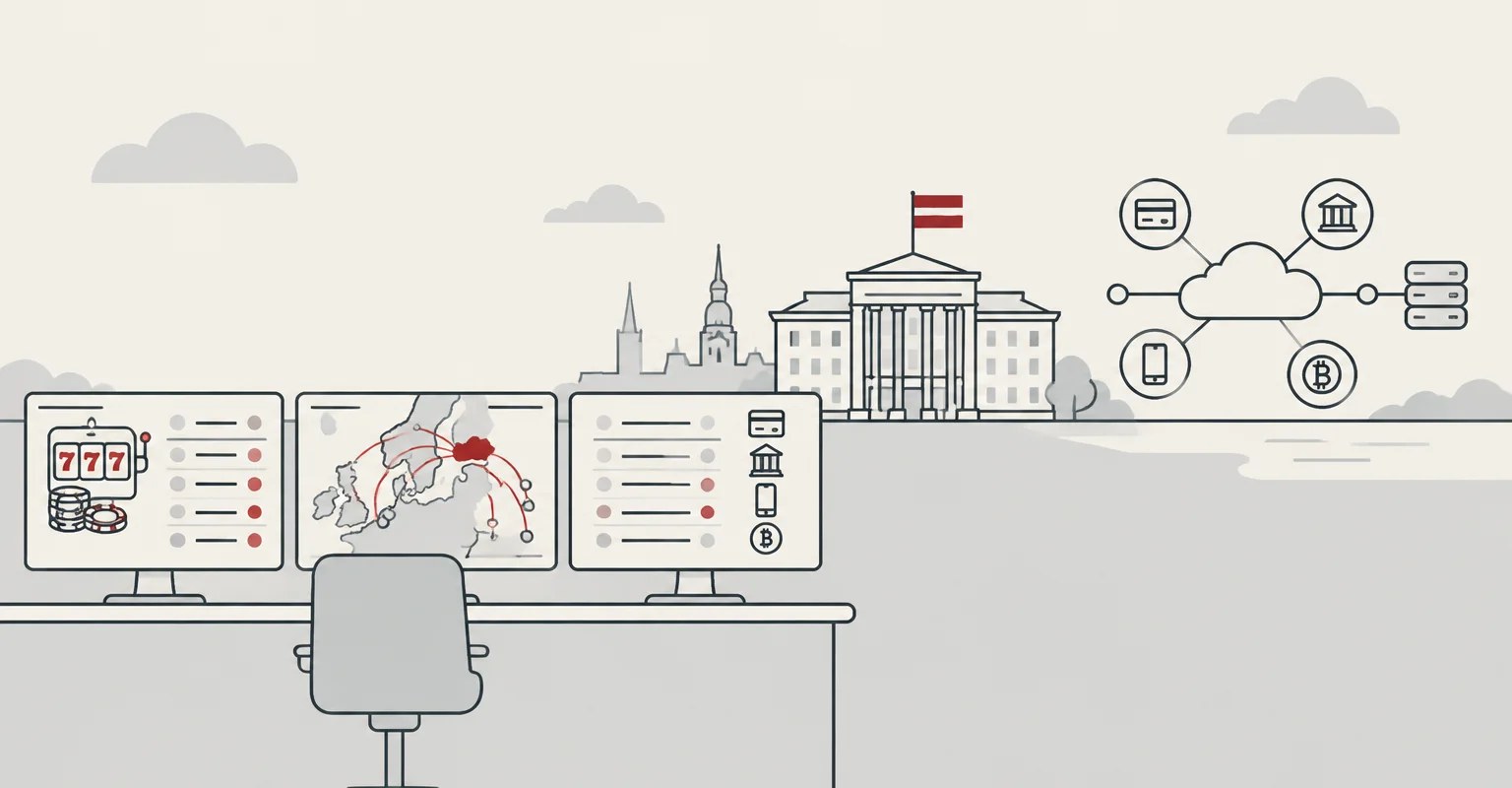
Latvia’s gambling trade association has called for tougher controls on payments to illegal operators, a clearer way to identify licensed companies and closer coordination among public bodies and online platforms.
The Latvian Gambling Business Association made the proposals during European Safer Gambling Week, arguing that illegal gambling accounts for a large share of the national market and that current statutory measures have not sufficiently restricted unlicensed operators.
A central proposal is to expand the practical reach of payment blocking. LLAB said Latvia currently blocks only transactions assigned merchant category code 7995, leaving payments to and from illegal gambling organisers unmonitored and unblocked when they use other codes. It wants blocking to apply to identified illegal organisers regardless of the code used in a transaction.
The association also sought a quick, accessible method of checking whether a gambling operator holds a Latvian licence. It said such a tool would make it easier to work with domestic and international partners, including Meta, Google and Apple, on advertising carried by online platforms.
LLAB put the size of Latvia’s gambling-sector shadow economy at €62 million last year, the largest among the three Baltic states. H2 Gambling Capital estimated that the online-gambling shadow economy could leave about €90 million out of Latvia’s state budget by 2030, based on its second in-depth analysis of the sector.
To tighten enforcement, the group proposed a permanent working group including the State Revenue Service, Consumer Rights Protection Centre, electronic-communications providers and supervisors, and payment and credit institutions. Its executive director, Līga Līce, said coordinated action and less bureaucracy were necessary to put more effective pressure on illegal operators.
The proposals sit alongside website blocking, an enforcement tool already used in Latvia and Lithuania. Research on European gambling regulation found that 18 of 31 EU and EEA states use such blocks, but illegal operators can evade them by changing domains or IP addresses. Regulators have therefore also explored payment blocks and restrictions on online advertising, particularly where conventional fines are difficult to enforce across borders.
European Safer Gambling Week 2026 took place from Nov. 16 to 22 under the theme “Play Smart, Stay Protected,” with six free online sessions for operators, regulators, researchers, support organisations and safer-gambling specialists.